Why Lightweight CMS Platforms Are Taking Over
Developers are moving away from bloated platforms. Here's why lightweight CMS solutions are becoming the preferred choice for faster websites.
A few years ago, almost every website project started the same way.
You installed a CMS.
Then a theme.
Then a handful of plugins.
A few weeks later, you were installing even more plugins to fix the problems caused by the first ones.
Most developers know exactly where that road leads.
A website that started out simple becomes slower, harder to manage, and increasingly expensive to maintain.
Clients rarely see any of that work. They just want a website that works.
And that's exactly why lightweight CMS platforms have become one of the biggest trends in web development.
Why Developers Started Looking for Something Different
Most developers didn't wake up one morning wanting to learn another CMS.
They reached a breaking point.
After enough projects, the same frustrations kept showing up:
- Slow admin dashboards
- Endless plugin updates
- Security patches every week
- Websites breaking after upgrades
- Bloated databases
- Complicated deployments
- Support tickets caused by plugin conflicts
Eventually you start asking yourself:
Why does a simple website require this much maintenance?
That question is pushing more developers toward lightweight and modern CMS platforms.
The Hidden Cost of a Bloated CMS
The biggest problem isn't usually the software itself.
It's the time.
Every hour spent maintaining a website is an hour you're not building something new.
Think about everything that quietly eats into your schedule:
Individually these tasks seem small.
Together they can consume days every month.
Time that could be spent on:
- New client projects
- Additional billable work
- Product development
- Growing your business
Clients Don't Care About Features
This was a lesson that took me longer than it should have.
Most clients don't ask which CMS powers their website.
They ask questions like:
- How fast can we launch?
- Will the website be fast?
- Can my team update content easily?
- How much maintenance will this require?
They're focused on outcomes.
Not technology.
Why Speed Matters More Than Ever
Website performance isn't just a developer concern anymore.
Everyone notices slow websites.
The problem is that many traditional CMS platforms weren't designed for today's expectations.
Over time they've accumulated more features, integrations, dependencies, plugins, and overhead.
Each layer adds complexity.
Each dependency introduces risk.
A fast CMS takes a different approach.
Instead of starting with everything and stripping things away later, it starts lean.
What Modern Developers Actually Want
The CMS conversation has changed.
Developers aren't looking for the platform with the biggest ecosystem anymore.
They're looking for the one that helps them get work done faster.
A modern CMS should be:
- Fast
- Flexible
- Easy to deploy
- Easy to customize
- Easy to maintain
- Developer-friendly
The CMS should support your workflow, not become the workflow.
Developers want tools that help them build.
Not tools that create more work.
Why Lightweight CMS Platforms Keep Growing
When you look at the trend closely, it makes perfect sense.
| Developers Want | Agencies Want | Clients Want |
|---|---|---|
| Faster launches | Better margins | Fast websites |
| Less maintenance | Faster delivery | Easy content editing |
| Cleaner codebases | Predictable workflows | Lower ongoing costs |
| Simpler deployments | Fewer support requests | Better reliability |
A lightweight CMS checks all three boxes.
That's why the trend keeps accelerating.
Why Shiply CMS Fits the Direction the Industry Is Moving
After building websites for years, one thing becomes obvious.
Most projects don't need dozens of plugins and endless configuration screens.
They need a solid foundation that lets developers move quickly.
That's where Shiply CMS comes in.
Built Around Simplicity
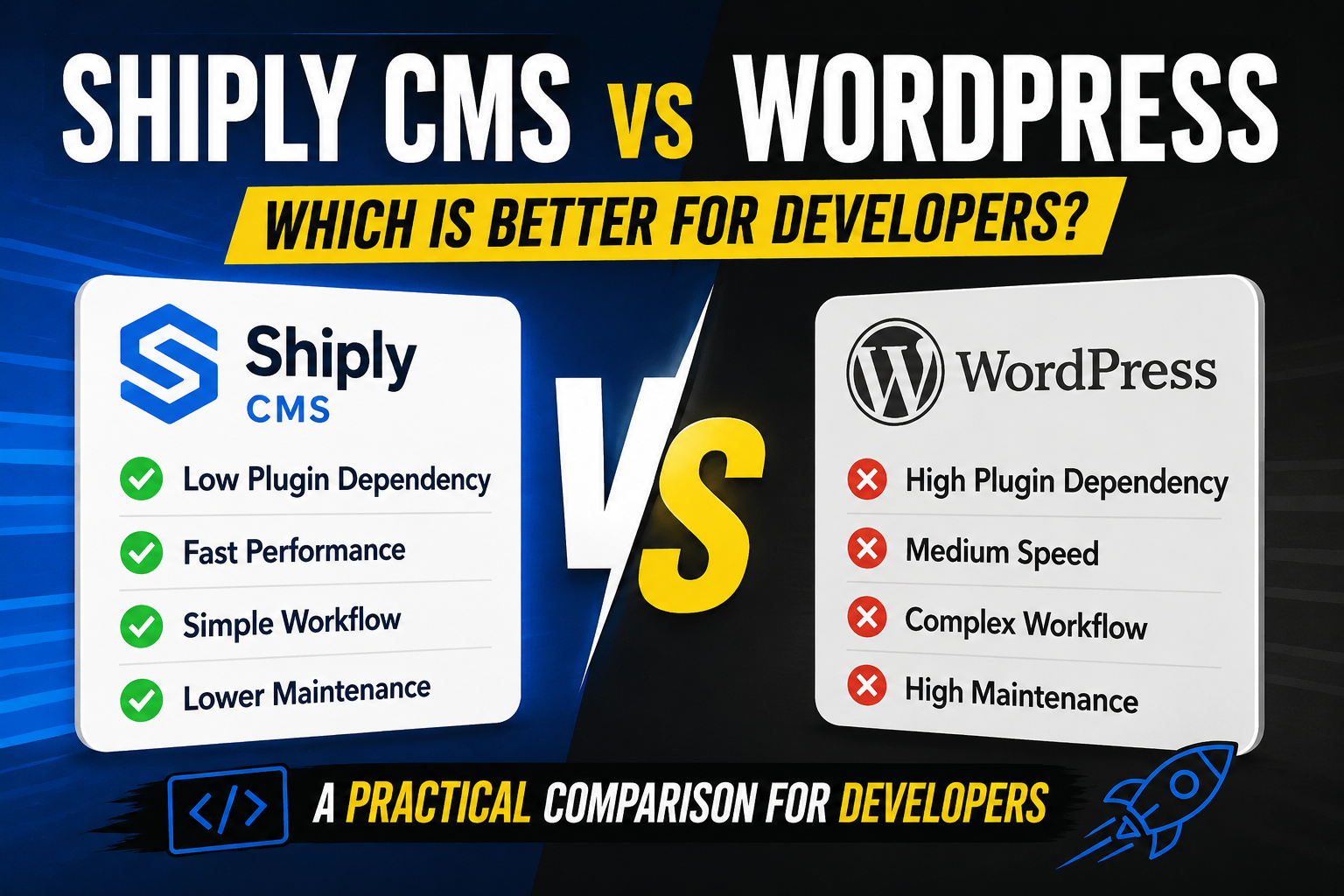
- Lightweight architecture
- Fast performance
- Developer-first workflows
- Reusable themes
- Minimal maintenance
- Faster deployments
The goal isn't to give you hundreds of options you'll never use.
The goal is to help you launch websites faster and spend less time maintaining them afterward.
Something I Wish I Learned Earlier
For years, I assumed bigger platforms were better.
More features felt like progress.
But every feature has a cost.
- More code
- More updates
- More dependencies
- More maintenance
Eventually you realize the most productive developers aren't always the busiest.
They're the ones removing friction from their workflow.
That's exactly why lightweight CMS platforms are taking over.
They're helping developers spend less time managing software and more time delivering results.
And honestly, that's what most of us got into web development to do in the first place.
Ready to Launch Websites Faster?
Stop wasting time fighting your CMS.
Shiply CMS helps developers launch websites faster, reduce maintenance, and spend more time building.
Download Shiply CMS and start your next project today.
👉 https://shiplycms.com/download
Build faster. Launch sooner. Get paid quicker.