A few years ago, I could build almost any client website with WordPress and a handful of plugins.
Today? Every project seems to need more plugins, more updates, and more maintenance.
And that's where the frustration starts.
If you're searching for a WordPress alternative in 2026, chances are you've hit the same wall.
The Dashboard Started Feeling Like the Slowest Part of Every Project
One thing I didn't expect was how much time I'd spend waiting.
- ⏱️ Waiting for admin pages to load
- 🔄 Waiting for plugins to update
- ⚙️ Waiting for settings screens to respond
The CMS was supposed to speed up my workflow.
Instead, it often became the bottleneck.
Every New Requirement Turned Into Another Plugin
Most client requests are completely normal.
Forms
Install a plugin.
SEO Controls
Install another plugin.
Security
Install another plugin.
Suddenly, a small website depends on twenty different pieces of software.
Then the Real Problems Start
You update one plugin.
Something breaks.
You update another.
Something else breaks.
Now you're spending your afternoon debugging instead of building.
I've lost entire days chasing plugin conflicts that should never have existed in the first place.
Clients Don't Care Which Plugin Failed
When a website breaks, clients don't ask:
“Was it Plugin A or Plugin B?”
They ask:
“Can you fix it?”
And honestly, that's fair.
- ❌ More plugins
- ❌ More updates
- ❌ More maintenance
- ❌ More risk
- ❌ More support requests
The Part Nobody Includes in the Cost Estimate
WordPress is often called free.
Technically, it is.
In reality, most professional projects eventually require:
Premium themes
Premium plugins
Backup tools
Security services
The biggest cost is time.
A Question I Started Asking Myself
After years of building websites, I noticed something.
The actual development wasn't taking most of my time anymore.
Maintenance was.
- 🔧 Install plugins
- ⚙️ Configure plugins
- 🔄 Update plugins
- 🧯 Repair plugin issues
The website itself was becoming the easy part.
Why More Developers Are Looking Beyond WordPress
I've noticed more freelancers and agency owners asking a different question lately.
Not this:
“Which plugin should I use?”
More like this:
“Do I really need all this complexity?”
For many client projects, the answer is no.
What Caught My Attention About Shiply CMS
When I first looked at Shiply CMS, it wasn't because I wanted more features.
It was because I wanted fewer moving parts.
Lightweight
No bloated setup.
Fast
Built for faster launches.
Developer-Focused
Cleaner workflow, fewer headaches.
Something Most Developers Underestimate
Your CMS affects how many projects you can complete every year.
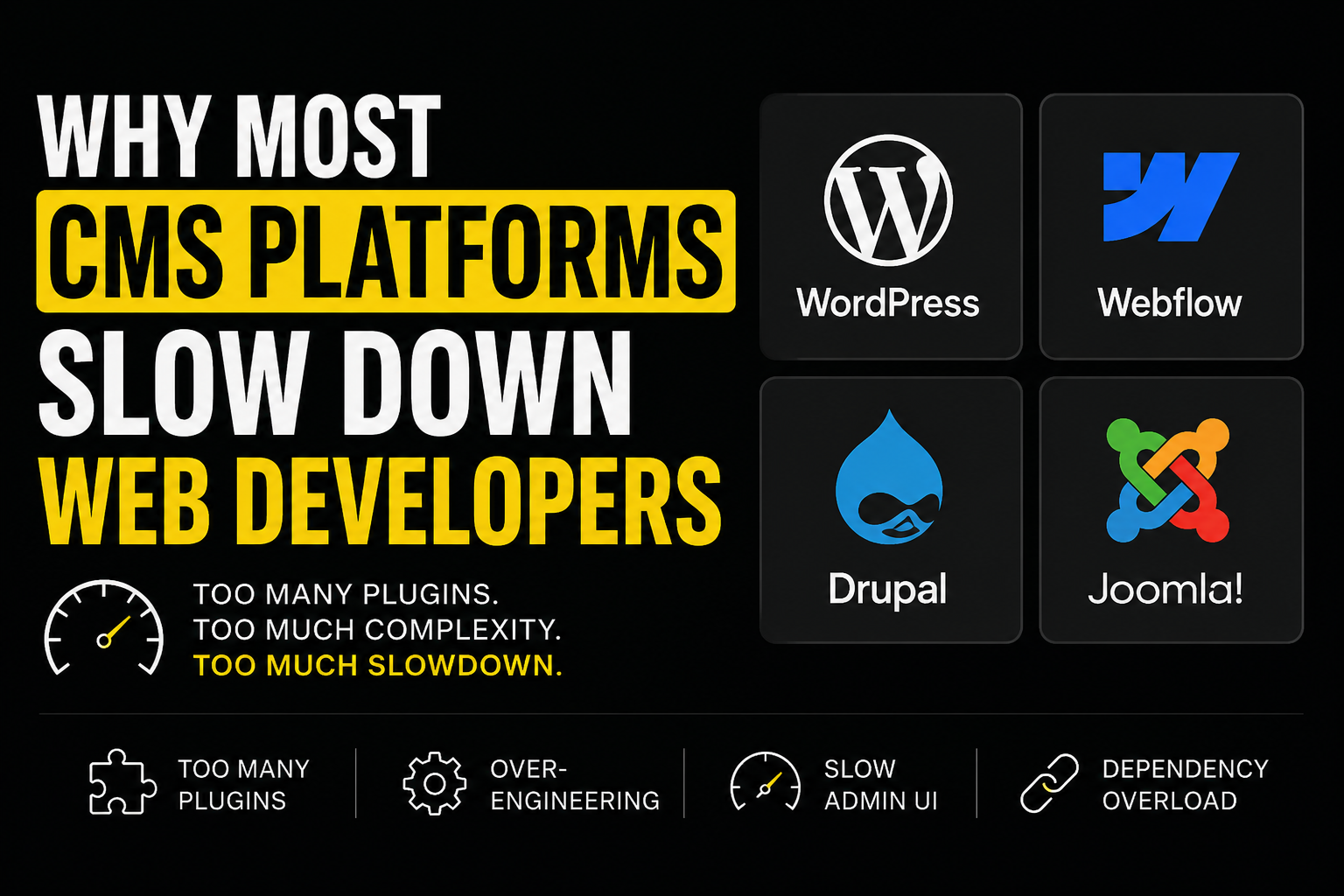
- ❌ Plugin bloat
- ❌ Slow dashboards
- ❌ Constant updates
- ❌ Security maintenance
- ❌ Compatibility issues
- ✅ Lightweight
- ✅ Faster setup
- ✅ Cleaner workflow
- ✅ Fewer dependencies
- ✅ Less maintenance
That's not marketing. That's simple math.
What I'd Recommend in 2026
WordPress still works.
For some projects, it's absolutely the right tool.
But if you're tired of plugin bloat, slow dashboards, endless updates, security headaches, and constant maintenance, it might be time to look at a different approach.
Shiply CMS fits that mindset.
It's clean. It's fast. And it's built for developers who would rather build than babysit plugins.